Do you own a 1970’s split level kitchen remodel project just waiting to happen? You are not alone. Millions of American homeowners still live with cramped, boxy kitchens left over from that era. Dark cabinets, laminate countertops, and closed-off walls — it all adds up to a space that no longer works for modern family life.
The good news? A well-planned remodel can completely change how your home looks and feels. At Nuhorizon Remodeling Experts, we help homeowners turn outdated spaces into functional, beautiful kitchens every day.
What Makes a 1970’s Split Level Kitchen So Challenging to Update?
The Layout Problem: Why Do These Kitchens Feel So Small?
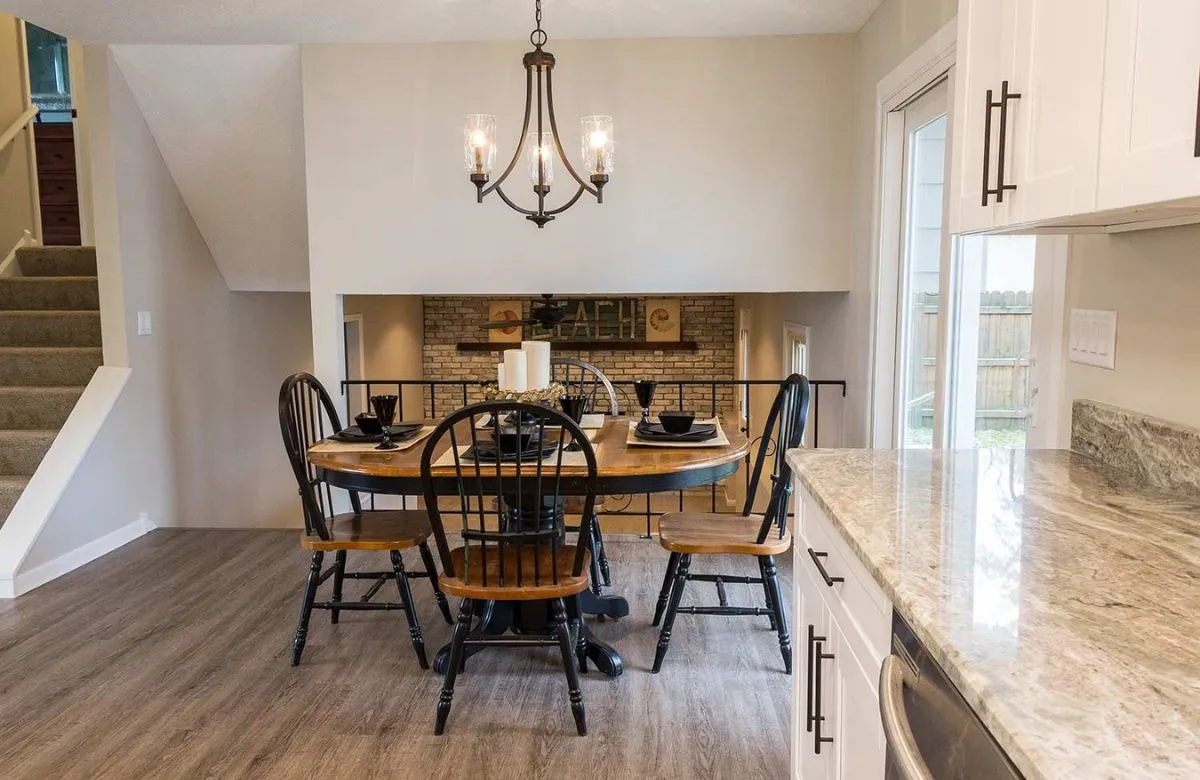
Split level homes were incredibly popular in the 1960s and 1970s. The design separated living spaces across different floor levels. It felt modern at the time. But the kitchens that came with these homes were typically small, enclosed, and cut off from the rest of the house.
You probably notice it every day — the kitchen sits on its own little island, separate from the dining room and living room. Natural light barely makes it through. The rooms feel boxy. The ceilings are often low. It is a layout built for a different era and a different lifestyle.
According to the National Association of Remodeling Industry (NARI), kitchen remodels consistently rank as one of the top home improvement projects for return on investment. You can recover between 60% and 80% of your remodel cost in added home value.
Common Features You Are Probably Still Living With
It helps to know what you are working with before you start planning. Most 1970s split level kitchens share a few telltale signs:
- Avocado green, harvest gold, or burnt orange color schemes
- Laminate or linoleum flooring
- Dark oak or walnut-stained cabinets
- Low drop ceilings
- Limited counter space
- Outdated appliances from 30 to 50 years ago
- A load-bearing wall separating the kitchen from the living area
Do any of those sound familiar? Good — now you know exactly what needs to go.
How Do You Open Up a 1970’s Split Level Kitchen Layout?
Should You Remove the Load-Bearing Wall?
The single biggest upgrade you can make to a 1970s split level kitchen is removing the wall between the kitchen and the living or dining area. It is the move that transforms a closed-off, dark space into an open, airy, family-centered hub.
You should know upfront — many walls in split level homes are load-bearing. It is important to never attempt wall removal without a licensed structural engineer’s assessment first. A certified kitchen remodeling contractor will install the proper support beams to keep your home’s structure intact.
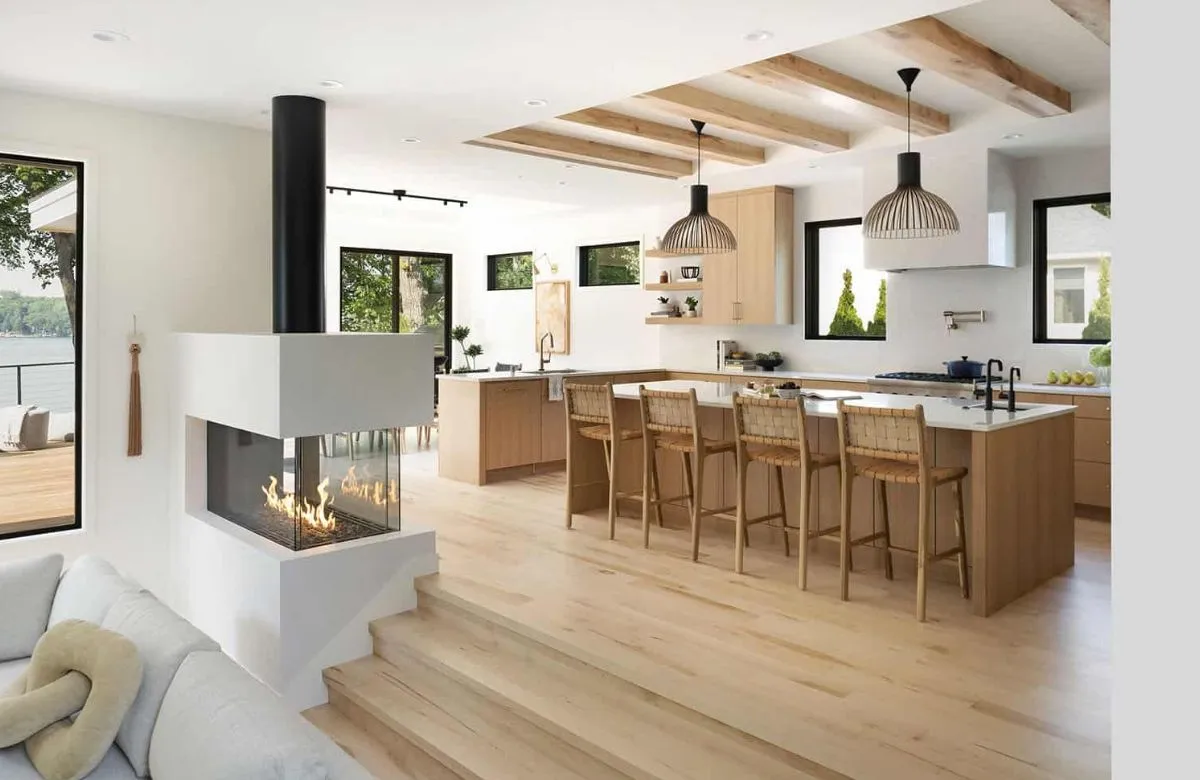
Once you remove that wall, the impact is dramatic. Natural light floods the space. You gain room for a center island. The kitchen connects naturally to the dining and living areas. Families who have done it consistently say it changed the entire feel of their home.
Pro Tip from Nuhorizon Remodeling Experts: After wall removal, install an engineered LVL beam to carry the structural load above. It is a non-negotiable step — not an optional upgrade.
What Is the Best Kitchen Layout for a Split Level Remodel?
You have a few strong options depending on your square footage and goals.
The Open Concept Layout It is the most popular choice. You remove the dividing wall and create one connected space. You gain room for an island and the kitchen becomes the social center of your home.
The U-Shaped Layout It works beautifully for split level kitchens that cannot lose a wall. You use three walls to create distinct zones for cooking, prep, and storage. It maximizes every inch of available space.
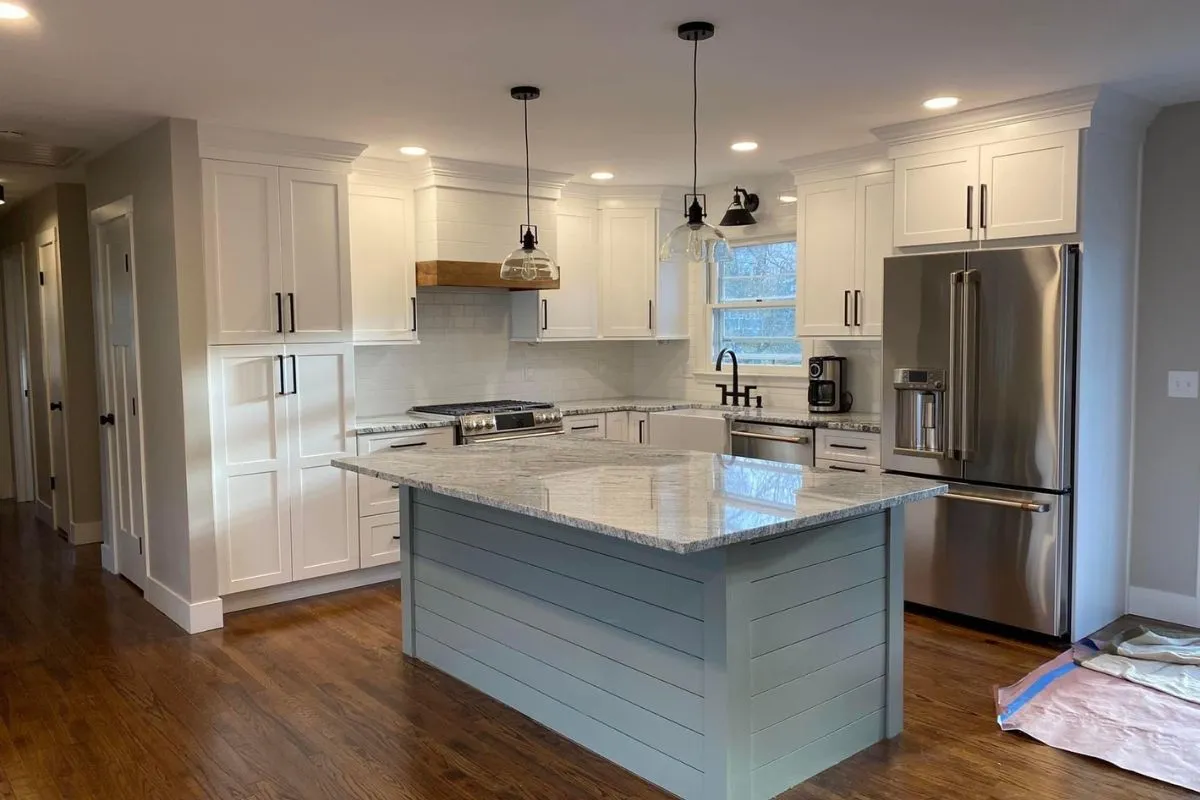
The Island-Centered Layout pairs perfectly with wall removal. A large center island adds counter space, seating, and storage all at once. It also creates a natural boundary between the kitchen and the adjacent living area.
What Updates Make the Biggest Visual Impact in an Old Split Level Kitchen?
How Do You Modernize 1970’s Kitchen Cabinets?
Your cabinets are probably the first thing guests notice. The dark, heavy wood finishes popular in the 1970s make kitchens feel smaller and older than they actually are. You do not always need to replace them entirely.
Here are your best options ranked by budget:
Budget-Friendly Repaint existing cabinets in a fresh, neutral color. Soft white, greige, or sage green all work well. Add new brushed gold or matte black hardware to complete the transformation.
Mid-Range Reface the cabinet boxes with new doors in a shaker style. It gives you a brand-new look at a fraction of full replacement cost.
Full Replacement It is the top-tier option. New custom or semi-custom cabinetry lets you redesign the layout entirely. You can add pull-out shelves, deep drawers, and vertical dividers — storage solutions that a 1970s kitchen never had.
Are you unsure which option fits your budget and goals? A consultation with Nuhorizon’s certified kitchen renovation specialists can help you make the right call before you spend a single dollar.
What Countertops Work Best for a 1970’s Kitchen Remodel?
Laminate countertops were everywhere in the 1970s. They had their moment. It is time to move on. Two materials consistently deliver the best combination of durability, beauty, and value:
Quartz It is non-porous, low maintenance, and available in hundreds of colors and patterns. It resists scratches and stains better than natural stone. For busy family kitchens, quartz is hard to beat.
Granite It adds a natural, one-of-a-kind look that never goes out of style. Each slab is unique. It does require periodic sealing, but it adds real perceived value to your home.
Butcher Block It brings warmth and texture to modern kitchen designs. It works especially well as an island top paired with quartz perimeter counters.
How Do Lighting and Flooring Change the Feel of a Split Level Kitchen?
Why Is Lighting So Critical in a 1970’s Kitchen Remodel?
Old split level kitchens were dark. A single overhead fixture in the middle of the room was standard. It was never enough. You can change the entire atmosphere of a kitchen with a smarter lighting plan.
It is important to think in layers:
- Recessed ceiling lights for overall ambient brightness
- Under-cabinet LED strips for task lighting at the counter
- Pendant lights over an island for style and focused light
- A statement chandelier over a dining area to define the space
The right lighting plan does not just look good — it makes the kitchen safer and more functional for everyday use.
What Flooring Should You Choose for a Split Level Kitchen Renovation?
Linoleum and old vinyl flooring are among the most common pain points in 1970s kitchens. Upgrading your floor ties the whole remodel together.
Hardwood or engineered hardwood is the most popular choice. It creates a warm, cohesive flow from the kitchen into the adjacent living areas — especially important in an open concept layout.
The large format tile is a strong runner-up. It is easy to clean, durable, and available in styles that mimic stone or wood.
Luxury vinyl plank (LVP) is the budget-conscious choice. Modern LVP looks convincingly like real wood and handles moisture better than hardwood in kitchen environments.
What Does a 1970’s Split Level Kitchen Remodel Actually Cost?
How Much Should You Budget for This Project?
Cost is always the big question. It is important to go in with realistic expectations. A 1970s split level kitchen remodel can range widely based on scope.
|
Remodel Scope |
Estimated Cost Range |
|---|---|
|
Cosmetic update (paint, hardware, fixtures) |
$5,000 – $15,000 |
|
Mid-range remodel (cabinets, counters, appliances) |
$25,000 – $50,000 |
| Full gut renovation with wall removal |
$50,000 – $100,000+ |
A general rule of thumb from most remodeling professionals is to budget between 5% and 15% of your home’s value for a kitchen remodel. Labor typically equals the cost of materials — so if your materials run $30,000, expect total costs around $60,000.
The best way to get an accurate number? Get a detailed estimate from a trusted contractor. At Nuhorizon Remodeling Experts, we offer transparent, itemized quotes so you know exactly where every dollar goes before the first tool touches your kitchen.
What Should You Look for in a Split Level Kitchen Remodeling Contractor?
How Do You Find the Right Team for This Project?
Not every contractor has experience with the structural complexities of split level homes. It is important to choose a team that understands load-bearing walls, multi-level transitions, and the unique challenges these homes present.
Nuhorizon Remodeling Experts team of experienced remodeling professionals has handled dozens of 1970s split level kitchen transformations. We manage every stage — from structural assessment and design to final installation and cleanup.
Final Thoughts
Your kitchen should work for your life — not against it. A 1970’s split level kitchen remodel is one of the most rewarding investments you can make in your home. You gain space, light, functionality, and real market value.
It starts with a plan. You identify the structural changes needed. You set a realistic budget. You choose materials that match your lifestyle. And you partner with a contractor who actually knows what they are doing.
Nuhorizon Remodeling Experts is ready to help you take the first step. Your dream kitchen is closer than you think.